
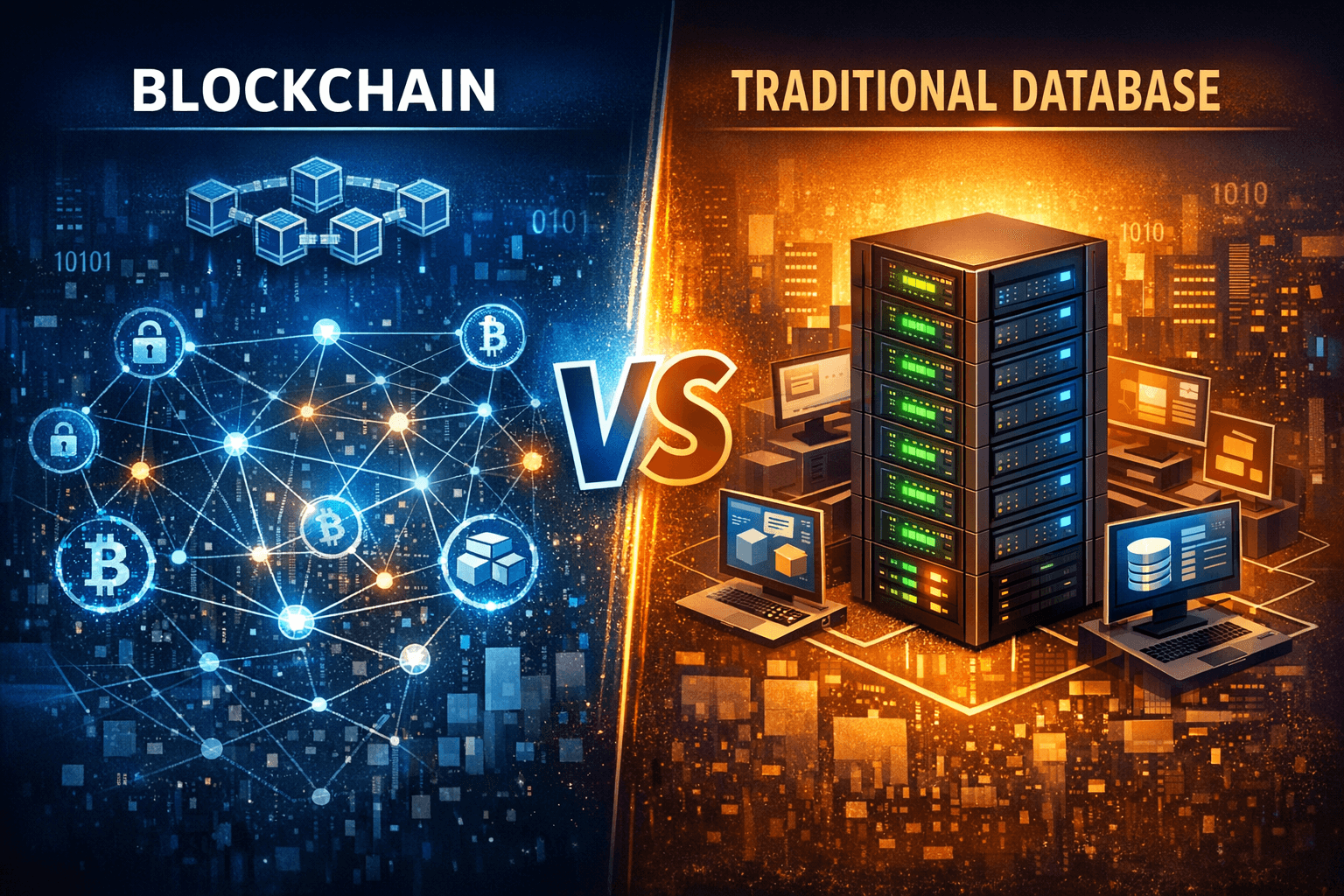
In today's digital world, data is the backbone of every application. Whether it’s banking systems, social media platforms, or e-commerce websites, everything depends on how data is stored and managed.
Traditionally, companies use centralized databases like MySQL or MongoDB. But with the rise of cryptocurrencies and decentralized apps, blockchain technology is becoming a strong alternative.
This creates a common confusion:
👉 Should you use blockchain or a traditional database?
If you’re a developer, startup founder, or tech enthusiast, choosing the right system is critical for performance, security, and scalability.
In this guide, you’ll learn everything about blockchain vs traditional databases, explained in simple terms with real-world examples.
🔗 What is Blockchain?
A blockchain is a distributed digital ledger that records data across multiple computers instead of a single central server.
🔹 Key Features:
- Decentralized – No single authority controls it
- Immutable – Data cannot be changed once stored
- Transparent – Everyone can verify transactions
- Secure – Uses cryptography
🔹 How It Works:
- Data is stored in blocks
- Each block links to the previous block
- Network nodes validate transactions
- Once added, data becomes permanent
👉 Example: Bitcoin, Ethereum
🗄️ What is a Traditional Database?
A traditional database is a centralized system where data is stored and controlled by a single organization.
🔹 Examples:
- MySQL
- PostgreSQL
- MongoDB
- Oracle
🔹 Key Features:
- Centralized control
- High performance
- Easy data modification
- Structured queries (SQL)
🔹 How It Works:
- Data is stored in tables
- Server processes queries
- Users can create, read, update, delete data
- Admin manages access
👉 Example: Banking systems, websites, apps
👉 Summary:
- Blockchain = Security + Trust
- Database = Speed + Efficiency
🏗️ Architecture Explanation
🔗 Blockchain Architecture
- Distributed network of nodes
- Each node stores full data
- Uses consensus mechanisms
🔹 Components:
- Blocks
- Nodes
- Hashing
- Consensus (PoW, PoS)
🗄️ Traditional Database Architecture
- Central server
- Client-server communication
- Query-based operations
🔹 Components:
- Database server
- Application layer
- Query processor
🔐 Security Comparison
🔗 Blockchain
- Cryptographic security
- Tamper-proof
- No single point of failure
🗄️ Database
- Depends on security setup
- Vulnerable to hacking
- Requires admin protection
👉 Winner: Blockchain
⚡ Performance & Scalability
🔗 Blockchain
- Slow transactions
- Limited scalability
🗄️ Database
- Very fast
- Highly scalable
👉 Winner: Database
💰 Cost Analysis
🔗 Blockchain
- High development cost
- Transaction fees
🗄️ Database
- Low setup cost
- Affordable hosting
👉 Winner: Database
🌍 Real-World Use Cases
🔗 Blockchain
- Cryptocurrency
- Smart contracts
- Supply chain
🗄️ Database
- Banking
- E-commerce
- Social media
✅ Advantages & Disadvantages
🔗 Blockchain
Advantages:
- Secure
- Transparent
- Decentralized
Disadvantages:
- Slow
- Expensive
- Complex
🗄️ Database
Advantages:
- Fast
- Cheap
- Easy to use
Disadvantages:
- Centralized
- Security risks
🧭 When to Use Blockchain?
Use blockchain when:
- Trust is an issue
- Multiple parties involved
- Data must not change
🧭 When to Use Database?
Use database when:
- Speed is required
- Frequent updates
- Budget is limited
[Image: Decision flowchart blockchain vs database]
🔄 Hybrid Approach
Best practice today:
- Blockchain → critical data
- Database → regular data
👉 Example:
- Blockchain stores transactions
- Database stores user profiles
🔮 Future Trends (2026)
- Growth of Web3
- Blockchain + AI
- Hybrid systems
- Faster blockchain networks
👉 Future = Combination of both technologies
🧾 Final Conclusion
👉 Choose Blockchain for:
- Security
- Transparency
- Decentralization
👉 Choose Database for:
- Speed
- Scalability
- Cost efficiency
👉 Best solution:
Use both together (Hybrid Model)
❓ FAQ
1. Is blockchain better than database?
Depends on use case.
2. Can blockchain replace database?
No, it complements it.
3. Why is blockchain slow?
Because of consensus validation.
4. Is blockchain secure?
Yes, highly secure.
5. What should startups use?
Start with database, then add blockchain if needed.