
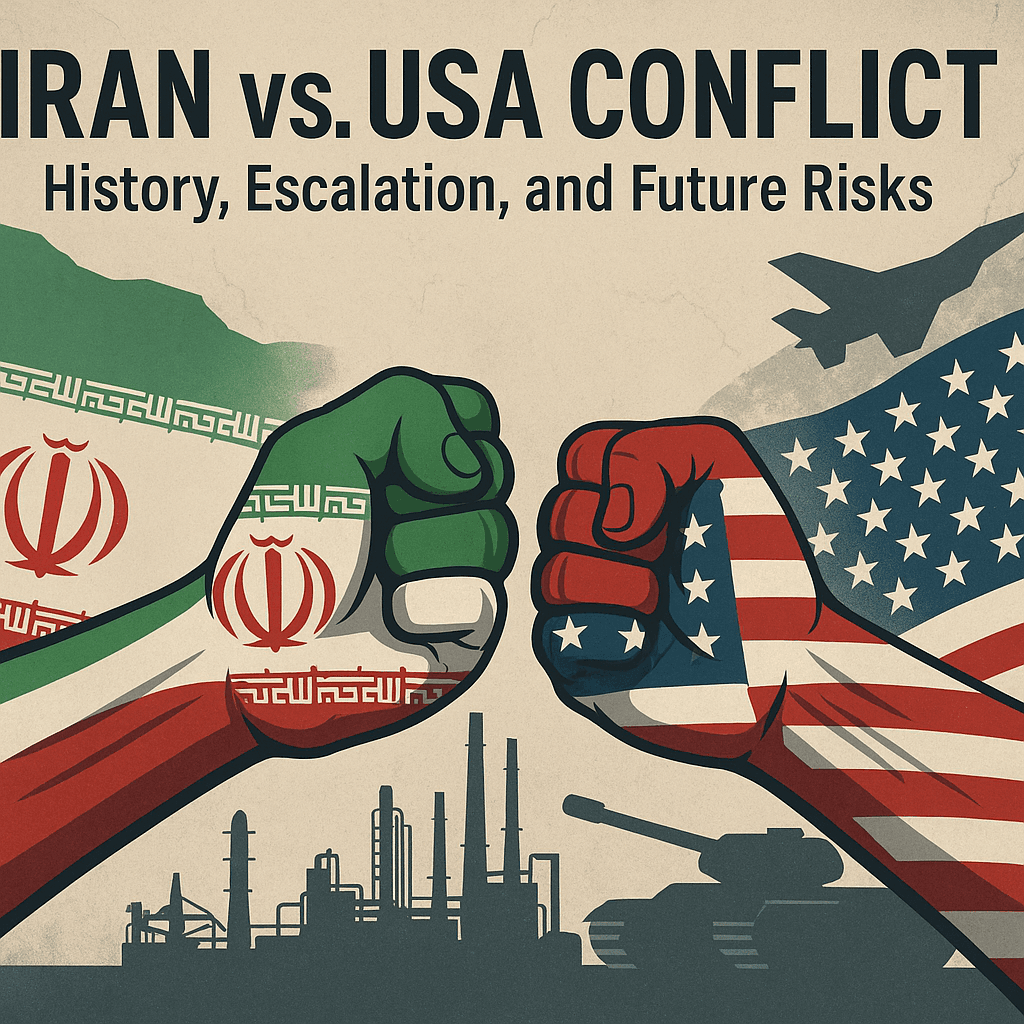
Introduction
The conflict between Iran and the USA has a long and complex history that has shaped the geopolitical landscape of the Middle East. This blog delves into the roots of the conflict, significant escalations, and the risks that lie ahead.
Historical Context
The relationship between Iran and the USA began to sour in the early 1950s. The 1953 Iranian coup d'état, orchestrated by the CIA, led to the overthrow of Prime Minister Mohammad Mossadegh and the strengthening of the monarchy under Shah Mohammad Reza Pahlavi.
Pre-Revolution Era
During the Shah's reign, Iran experienced significant modernization but also widespread discontent. The Islamic Revolution of 1979 resulted in the overthrow of the Shah and the establishment of the Islamic Republic, which fundamentally altered Iran's relationship with the USA.
Key Events in the Iran-USA Conflict
- 1979 Hostage Crisis: After the revolution, Iranian students seized the US Embassy in Tehran, holding 52 American diplomats and citizens hostage for 444 days.
- Iran-Iraq War (1980-1988): The USA supported Iraq during this conflict, further straining relations.
- Sanctions and Nuclear Program: In response to Iran's nuclear ambitions, the USA has imposed several rounds of sanctions, heightening tensions.
Recent Escalations
In recent years, the conflict has escalated due to various incidents, such as the killing of Qasem Soleimani in 2020 and the ongoing tensions surrounding Iran's nuclear program.
2020 Tensions
The assassination of Iranian General Qasem Soleimani by a US drone strike marked a significant turning point in US-Iran relations. Iran retaliated with missile strikes on US bases in Iraq, showcasing the potential for rapid escalation.
Current State of Affairs
The current state of the Iran-USA conflict is characterized by a delicate balance of power. While both nations engage in diplomatic talks, underlying tensions remain high.
Diplomatic Efforts
Efforts such as the Joint Comprehensive Plan of Action (JCPOA) aimed to limit Iran's nuclear capabilities in exchange for sanctions relief, but the US withdrawal from the agreement in 2018 has complicated negotiations.
Future Risks and Considerations
The future of the Iran-USA conflict poses several risks not only to the two nations but also to global stability.
Potential for Military Conflict
The risk of military confrontation remains a significant concern, with both sides demonstrating military capabilities and a willingness to use them.
Impact on Global Oil Markets
Escalations in the conflict could disrupt oil supplies and lead to fluctuations in global oil prices, impacting economies worldwide.
Conclusion
The Iran-USA conflict is a complex issue with deep historical roots and significant implications for the future. Understanding the past and present dynamics is crucial for anticipating future developments.