What are AI Agents?
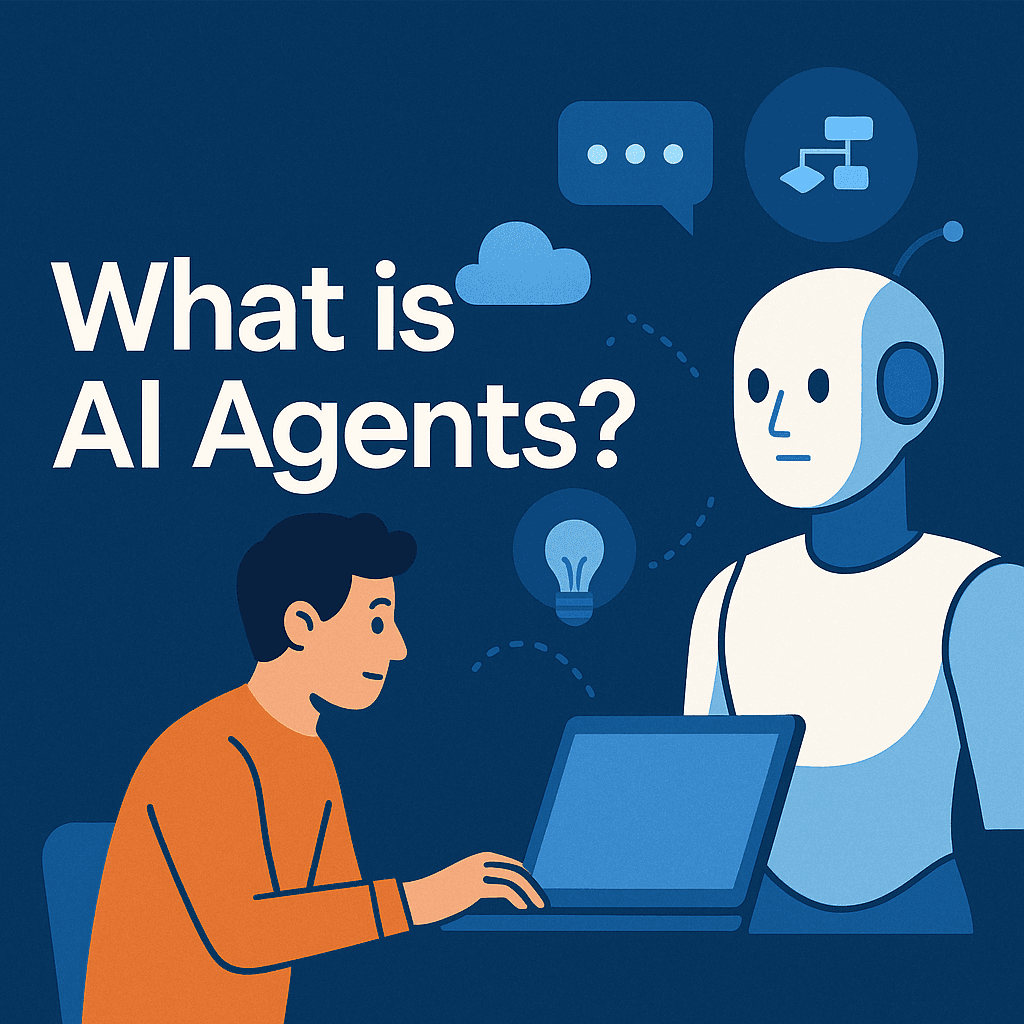
AI agents are advanced software programs designed to perform tasks autonomously or semi-autonomously, using artificial intelligence to analyze data, make decisions, and interact with their environment. They can range from simple chatbots to complex systems capable of learning and adapting through machine learning.
The Evolution of AI Agents
The concept of AI agents has evolved significantly over the past few decades. Initially, AI was limited to rule-based systems that followed predefined instructions. However, with advancements in machine learning and natural language processing, AI agents have become more sophisticated and capable of understanding context and nuance.
Early AI Systems
In the early days, AI systems were primarily used for specific tasks such as playing chess or solving mathematical problems. They relied heavily on human programming and lacked the ability to learn from experience.
Introduction of Machine Learning
The introduction of machine learning marked a turning point. AI agents began to learn from data, adapting their behavior based on past experiences. This capability enabled them to tackle more complex tasks and improve their accuracy over time.
Key Characteristics of AI Agents
AI agents possess several key characteristics that distinguish them from traditional software:
- Autonomy: AI agents can operate independently, making decisions and performing tasks without human intervention.
- Adaptability: They can learn from new information and experiences, allowing them to improve their performance over time.
- Interactivity: Many AI agents are designed to interact with humans and other systems, facilitating seamless communication.
- Goal-oriented: AI agents are typically programmed to achieve specific objectives, whether it's answering questions, automating processes, or analyzing data.
Types of AI Agents
AI agents can be categorized into several types based on their functionality and application:
Reactive Agents
Reactive agents respond to specific stimuli without any internal model of the world. They operate based on predefined rules and do not possess memory.
Deliberative Agents
Deliberative agents have a model of the world and can plan actions based on their goals. They consider various possibilities before making decisions.
Learning Agents
These agents improve their performance through experience, utilizing machine learning techniques to adapt their behavior over time.
Applications of AI Agents
AI agents are being utilized across various industries, transforming how businesses operate:
Customer Service
AI-powered chatbots are revolutionizing customer service by providing instant responses, resolving issues, and enhancing customer satisfaction.
Healthcare
In the healthcare sector, AI agents assist in diagnosing diseases, analyzing medical images, and managing patient data, leading to improved outcomes.
Finance
Financial institutions use AI agents for fraud detection, risk assessment, and algorithmic trading, enabling faster and more accurate decision-making.
Challenges and Concerns
Despite their potential, AI agents face several challenges:
- Ethics: The use of AI agents raises ethical concerns, particularly regarding privacy and decision-making transparency.
- Job Displacement: Automation through AI agents could lead to job losses in certain sectors, prompting discussions about the future of work.
- Bias: AI agents can inadvertently perpetuate biases present in training data, leading to unfair outcomes.
The Future of AI Agents
As technology continues to advance, the future of AI agents looks promising. With ongoing research in deep learning and reinforcement learning, these agents are expected to become even more capable and integrated into daily life.
Integration with IoT
The combination of AI agents with the Internet of Things (IoT) will enable smarter environments where devices communicate and make decisions autonomously.
Human-AI Collaboration
Future AI agents will increasingly collaborate with humans, augmenting human capabilities rather than replacing them, thus fostering a new era of productivity.