
Introduction
Programming languages are used to communicate with computers and build software applications. One of the most important concepts for beginners is understanding the difference between high-level and low-level programming languages.
In this guide by TechYantram, you will learn both types in a simple and clear way, along with their differences and real-world uses.
What is a Programming Language?
A programming language is a set of instructions used to tell a computer what to do.
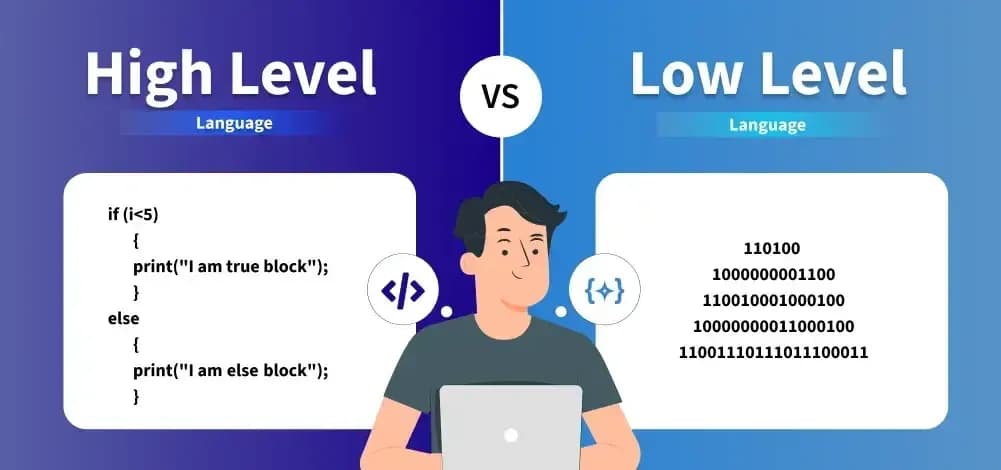
What is a High-Level Language?
A high-level programming language is designed to be easy for humans to read and write. It uses simple syntax similar to English.
Examples:
JavaScript
Python
Java
Example code:
let message = "Hello World";
console.log(message);
Advantages:
- Easy to learn and understand
- Faster development
- Requires less code
- Works on multiple platforms
Limitations:
- Slower compared to low-level languages
- Less control over hardware
What is a Low-Level Language?
A low-level programming language is closer to machine code and interacts directly with hardware. It is harder to understand but more powerful.
Types:
Machine Language (binary: 0 and 1)
Assembly Language
Example:
MOV A, B
ADD A, C
Advantages:
- Very fast execution
- Direct hardware control
- Efficient memory usage
Limitations:
- Difficult to learn
- Time-consuming to write
- Less portable
Real-World Use Cases
High-level languages are used in web development, mobile applications, and software development.
Low-level languages are used in operating systems, embedded systems, and hardware programming.
Which One Should You Learn First?
Beginners should start with high-level languages such as JavaScript or Python. After gaining experience, learning low-level concepts can help in understanding how systems work internally.
Why This Topic Matters
Understanding the difference helps you choose the right language for your project and improves your problem-solving skills.
Conclusion
Both high-level and low-level programming languages are important. High-level languages make development easier, while low-level languages provide better performance and control.
TechYantram recommends starting with high-level languages and gradually learning low-level concepts.
FAQs
What is a high-level language?
A language that is easy for humans to read and write.
What is a low-level language?
A language that is closer to machine code and hardware.
Which is better for beginners?
High-level languages are better for beginners.