
Introduction
Laravel is one of the most popular PHP frameworks used for building modern web applications. It provides a clean and elegant syntax, making development faster and more efficient.
In this complete guide by TechYantram, you will learn Laravel from basic concepts to advanced features such as MVC architecture, routing, controllers, migrations, authentication, and best practices.
What is Laravel?
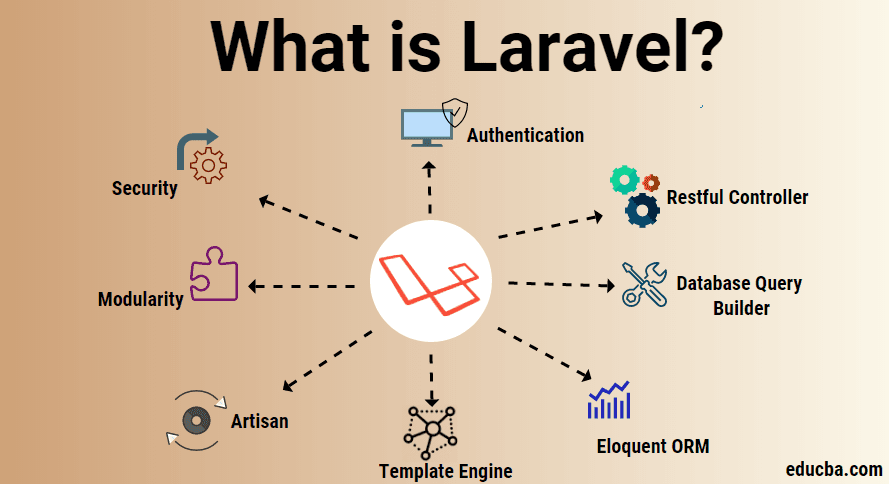
Laravel is an open-source PHP framework designed for web application development. It follows the MVC (Model-View-Controller) architecture and helps developers build scalable and secure applications.
Why Use Laravel?
Laravel offers several advantages:
- Clean and readable syntax
- MVC architecture
- Built-in authentication
- Powerful routing system
- Database migration support
- Security features
- Large community support
Installing Laravel
Make sure you have PHP and Composer installed. Then run:
composer create-project laravel/laravel my-app
cd my-app
php artisan serve
Open your browser:
Laravel Project Structure
Important folders:
- app/ (application logic)
- routes/ (all routes)
- resources/ (views and assets)
- database/ (migrations and seeds)
- public/ (entry point)
MVC Architecture in Laravel
Laravel follows MVC:
Model:
Handles database operations
View:
Handles UI (Blade templates)
Controller:
Handles business logic
Routing in Laravel
Routes define how your application responds to requests.
Example:
Route::get('/home', function () {
    return view('home');
});
Routes are defined in:
routes/web.php
Controllers in Laravel
Controllers manage application logic.
php artisan make:controller UserController
Example:
class UserController extends Controller {
    public function index() {
        return "Users Page";
    }
}
Blade Templating Engine
Laravel uses Blade for views.
<h1>Hello {{ $name }}</h1>
Features:
- Template inheritance
- Control structures
- Clean syntax
Database and Migrations
Laravel simplifies database management using migrations.
php artisan make:migration create_users_table
Example:
Schema::create('users', function (Blueprint $table) {
    $table->id();
    $table->string('name');
    $table->timestamps();
});
Run migration:
php artisan migrate
Eloquent ORM
Eloquent is Laravel’s ORM for database interaction.
$user = User::find(1);
Features:
- Easy queries
- Relationships
- Clean syntax
Authentication in Laravel
Laravel provides built-in authentication.
php artisan make:auth
Features:
- Login system
- Registration
- Password reset
Middleware in Laravel
Middleware filters HTTP requests.
public function handle($request, Closure $next) {
    return $next($request);
}
API Development in Laravel
Laravel is widely used for building APIs.
Route::get('/api/users', function () {
    return User::all();
});
Security Features
Laravel provides built-in security:
- CSRF protection
- Password hashing
- SQL injection prevention
- Authentication system
Real-World Use Cases
Laravel is used in:
- Web applications
- Admin panels
- REST APIs
- E-commerce platforms
- SaaS applications
Performance Optimization
To improve performance:
- Use caching
- Optimize queries
- Use queues
- Minimize database calls
Best Practices
- Follow MVC structure
- Use migrations properly
- Keep controllers clean
- Use environment variables
- Write reusable code
Common Mistakes to Avoid
- Writing logic in views
- Not using migrations
- Poor database design
- Ignoring security practices
Learning Path
- Learn PHP basics
- Understand MVC
- Learn Laravel basics
- Build CRUD applications
- Work on real projects
Conclusion
Laravel is a powerful and developer-friendly framework for building modern web applications. With features like MVC architecture, routing, authentication, and ORM, it simplifies backend development.
TechYantram recommends practicing Laravel by building real-world projects to gain expertise.
FAQs
What is Laravel?
Laravel is a PHP framework for building web applications.
Is Laravel good for beginners?
Yes, it is beginner-friendly with clean syntax.
What is MVC in Laravel?
MVC stands for Model-View-Controller architecture.
Is Laravel good for APIs?
Yes, Laravel is widely used for API development.